
Lead better when everything is falling apart
A leper king’s method for winning under pressure

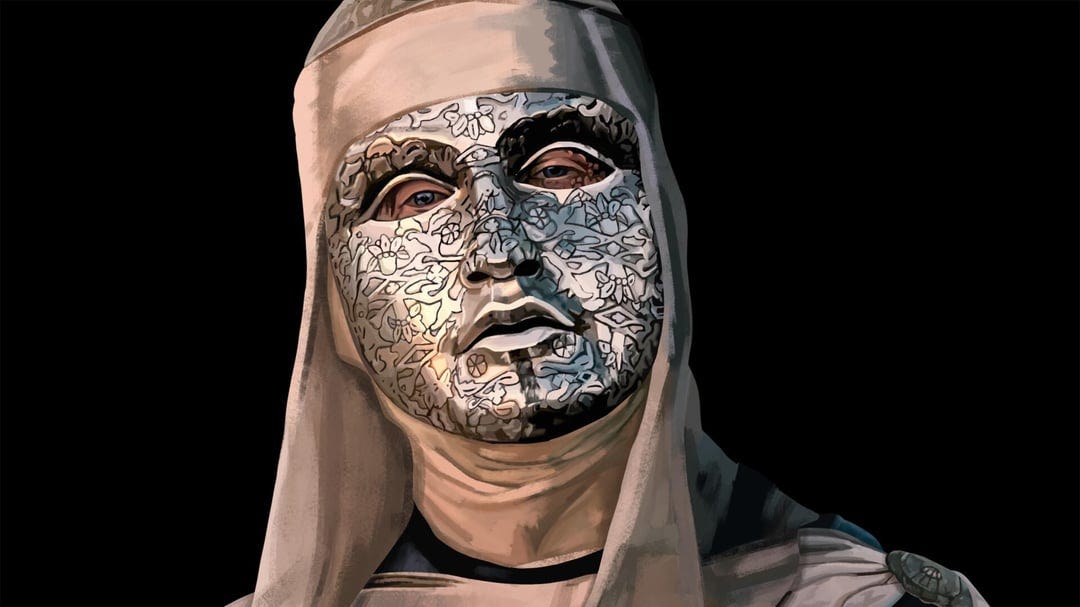
Most Christians today don’t lead half as well as a dying teenager once did.
The Crusader King Baldwin IV couldn’t walk on his own, had no advantage, and was outnumbered 50 to 1, and still, he won. What he lacked in strength, he made up for in surrender. And that changed everything.
And that changed everything.
If you’re a Christian leader carrying a business, a church, or your family, this story might surprise you.
Why your weakness may be God’s platform, not a problem
How to make decisions when you feel spent
What humble, faithful leadership really looks like under pressure
Let’s dig into one of the boldest, most forgotten leadership lessons in history.
Baldwin IV: The Leper King
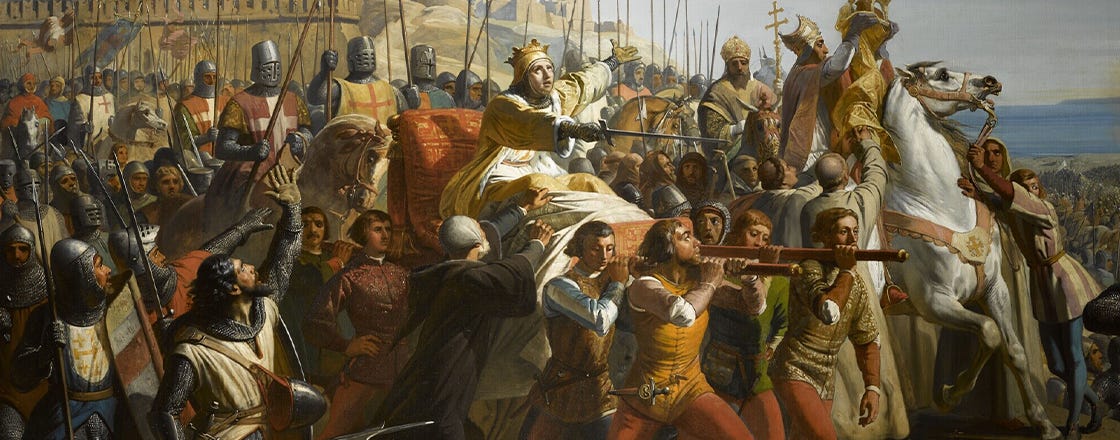
Greatness in God’s kingdom is not the absence of weakness, but obedience in the midst of it.
The Crusader King of Jerusalem, Baldwin IV, testifies to this.
As a boy, Baldwin’s tutor noticed something unsettling. When the other children bit and scratched in play, Baldwin did not wince. His arm could be pinched until it bruised, yet he laughed as if nothing touched him. What seemed a strange quirk soon revealed a darker truth: leprosy had already numbed his flesh.
At thirteen, he was crowned king of Jerusalem with that shadow upon him. In the Middle Ages, the word leper carried the weight of exile, shame, and inevitable decline. A throne meant for warriors was now borne by a child already wasting away. Many thought his reign would be short, his kingdom left to stronger hands (or to be taken by his enemies).
But Baldwin did not retreat.
Instead he learned to master a horse, stiff fingers gripping the reins as though his calling depended on it. He stepped into courts thick with ambition and rivalry, where regents and barons pressed their own agendas. Even before he reached majority, his signature authorized raids across enemy lines. Though his body weakened, his will sharpened.
But even with his tenacity, the toll of his disease grew mercilessly.
He soon leaned on attendants to walk. His fingers withered and his sight dimmed. Pain gnawed like a silent adversary that never left his side, only growing by the minute.
Then came his greatest trial.
In 1177, Saladin saw his moment. The sultan marched north with an army that darkened the horizon, expecting to seize Jerusalem before the year’s end.
Baldwin was sixteen, recovering from illness, and had only a fraction of the forces he needed to repel them. Because of this, some allies abandoned him, convinced the cause was lost. He mustered barely four hundred knights and a handful of Templars to stand against tens of thousands that seemed impossible to overcome.
Despair would have been natural. But instead, Baldwin ordered the relic of the True Cross raised before his men. Before hardened soldiers, he lay prostrate in prayer, entrusting the battle to the Lord.
“The battle is the Lord’s, and he will give you into our hand” (1 Samuel 17:47).
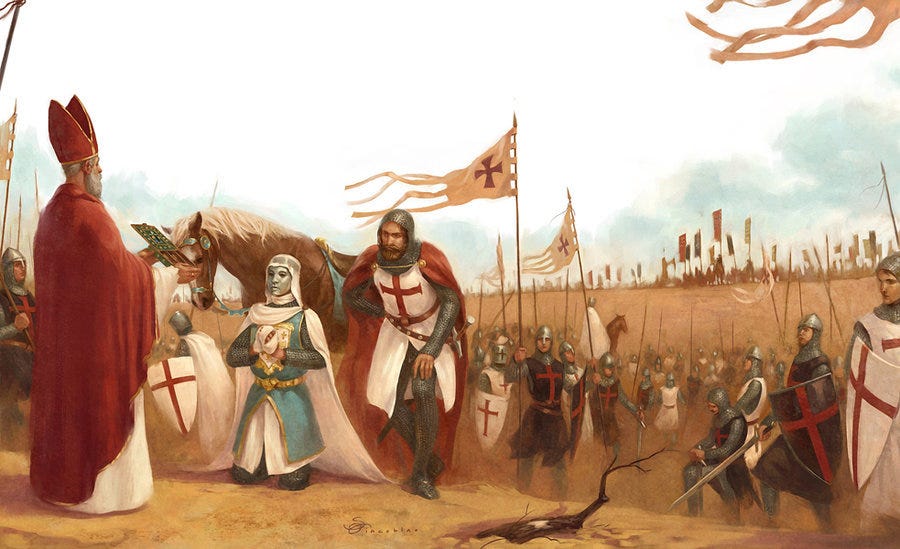
When he rose, it was not with strength restored to his limbs but with fire renewed in his spirit.
His men, in need of encouragement, became similarly zealous by his example.
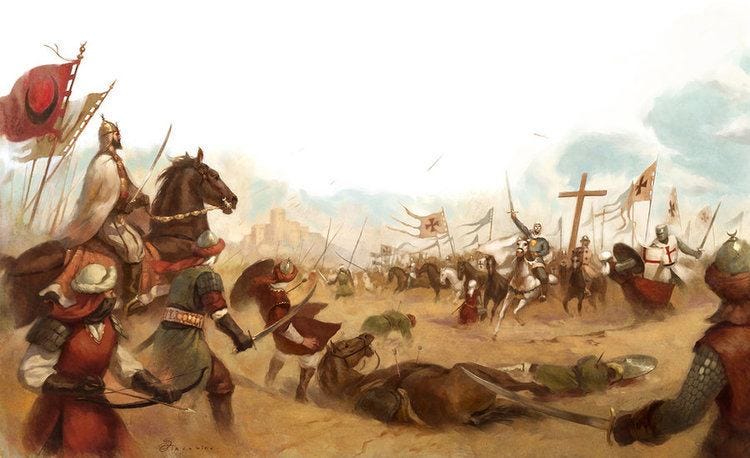
On the plain of Montgisard, the boy-king had himself strapped to his horse so he would not fall. Pushing past the pain, he led a charge against Saladin’s host. Outnumbered more than fifty to one, Baldwin spurred his knights forward as though heaven’s armies rode beside them.
What followed was unthinkable.
Saladin’s lines shattered, and thousands of his men were slain. Ninety percent of his force was lost, and the great sultan himself barely escaped with his life. Against every calculation of men, Baldwin had led one of the most astonishing victories of the Crusades.
Jerusalem erupted when the king returned.
The boy who should have been pitied now wore the laurels of triumph. Yet Baldwin did not gloat. He did not boast or seize power with arrogance, claiming his own strength. Instead, he governed with restraint and humility, earning even the respect of Saladin, who regarded him as a worthy foe.
Few kings in history balanced triumph with such quiet dignity.
The years that followed this triumph were, unfortunately, cruel to him. As the leprosy progressed, Baldwin could no longer see clearly. His voice faltered and his steps grew weaker until he could not walk. Still he arranged for his young nephew to succeed him, ensuring stability in the kingdom.
By the Lord’s grace, he abdicated with foresight and died at twenty-four, leaving behind a testimony for the ages.
The words of the Apostle Paul echo through his life:
“Though outwardly we are wasting away, yet inwardly we are being renewed day by day” (2 Corinthians 4:16).
Baldwin embodied this truth.
His body crumbled, yet his spirit stood unbroken. Baldwin’s reign testified that true strength is not measured in one’s flesh or sword, but in the faith that clings to God when everything else withers away.

Application & Exhortation
Baldwin IV’s story dismantles the illusions many Christians carry.
Strength is not perfect health, abundant resources, or a commanding presence. True strength is faith that refuses to yield. Baldwin’s life shows us that weakness does not cancel a calling, and frailty does not silence the voice of obedience.
The lesson stretches across centuries.
Christian leaders today still face pressures that feel just as overwhelming: companies stretched thin, congregations declining, families weighed down with unpredicted financial burdens.
You may feel as though you are strapped to your responsibilities, holding on by a thread. But be encouraged, for Baldwin’s reign reminds us that Christian leadership is not the absence of weakness but the courage to trust God in the midst of it.
When Baldwin prayed before the True Cross and rose to face Saladin, he carried no illusions of his own power. He rose with faith. That same strength is available to every Christian who leans on Christ. The words of Paul remain a lifeline:
“I can do all things through Christ who strengthens me” (Philippians 4:13).
This is the secret Baldwin’s life whispers to us still: weakness is not a barrier but the very canvas where God displays His power.
When odds overwhelm you, when resources prove scarce, when others doubt your endurance, you are invited to lead with courage rooted not in yourself but in Christ.
So pray before your battles. Trust the Cross lifted high before you, which so many in the past have depended on and succeeded through. Measure success not by ease or acclaim, but by faithfulness to the One who called you.
May our prayer echo Baldwin’s testimony:
Lord, in my weakness, be my strength. Teach me to lead with faith when I cannot lead with force. Let my life, like his, bear witness that though the body falters, the spirit endures because You sustain me.
P.S…Whenever you’re ready, here’s one way I can help you as a Christian Ghostwriter:
Book a free 30-minute call and get a ghostwritten sample
Send me your topic, and I’ll write 2–3 sample paragraphs in your voice. Then we’ll hop on a call to talk through your vision, goals, and next steps.
Whether you’re working on a book, a devotional, a newsletter, or want consistent content for LinkedIn or X for your business, I can help you grow.